The Deadline That Refuses to Die
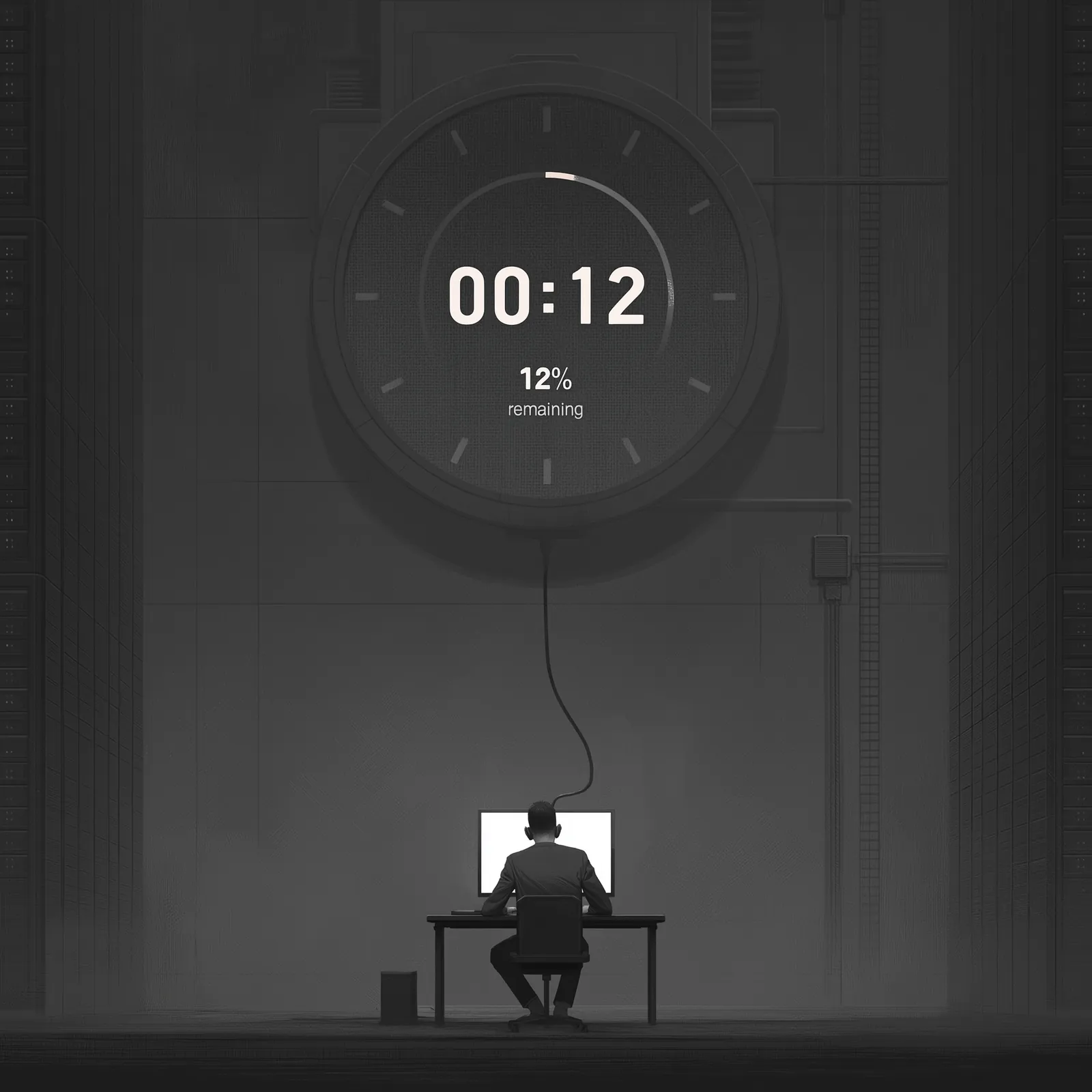
The contemporary worker no longer fears the factory clock. He fears the usage meter.
The clock was cruel, but legible. It announced the beginning and end of labor, and it stopped at the door. The usage meter is more intimate. It follows the worker past the door, into thought itself, measuring not what he makes but how much intelligence he is permitted to borrow before the week resets.
The AI company presents the limit as generosity. Access is "extended." Capacity is "increased." A deadline is postponed, and gratitude floods the timeline.
Yet the gift produces the anxiety it claims to relieve. The extension reveals that access was never stable. It was always provisional, revocable, subject to an announcement that arrives only after the worker has already reorganized his life around the disappearance.
So the deadline does not end. It becomes a mode of government.
One developer panic-builds a flight simulator before the model he depends on vanishes. Another burns through his quota like a man eating before a storm. A third discovers that the machine has changed silently beneath his hands, corrupting days of work without a word of warning. The tool no longer merely assists production. It dictates its tempo, its emotional weather, even its catastrophes. This is not ownership. It is tenancy inside someone else's cognition, on a lease with no fixed term.
The model switch is the clearest tell. The interface stays continuous, but the intelligence behind it has been replaced. The worker speaks into the same window and a different mind answers. There is no rupture, no ceremony, no notice: only a quiet degradation. Lost context. Altered judgment. Code that no longer holds. Continuity becomes a visual fiction. The platform calls this flexibility. The worker experiences it as gaslighting, because he is told nothing has changed while everything has.
Here the old vocabulary of labor updates itself. Under industrial capitalism, the worker was alienated from the product of his labor: he made the thing and did not own it. Under model capitalism, he is alienated from the conditions of his thought. He cannot know which intelligence will answer tomorrow, how long it will stay, or whether the workflow he built this week will still exist next week. The estrangement has moved upstream, from the object to the faculty that produces it.
And uncertainty, once installed, is easily converted into obedience.
Scarcity produces devotion. The threatened withdrawal of access is what makes access feel sacred. The platform does not need to take the tool away. It only needs the worker to believe, always, that it might. Dependence does the rest of the disciplining for free.
This is why "final extension" is the perfect phrase of the platform age. It promises an ending and performs a continuation. It offers the relief of finality precisely in order to keep the deadline alive. The final extension is never the final one, because a final extension that actually ended would forfeit its power. The threat has to renew.
The deadline, then, was never meant to arrive.
It was meant to remain: postponed, sacred, and quietly in charge.